
What on earth is Andrew going on about?
OK, let me explain why I’ve decided to get all retro and use email to connect with you.
Basically, since I stopped using Facebook I’ve been rubbish at staying in touch with people I care about — which seems freaking daft, considering we do still have email, or the phone for that matter. I guess I could call you, but phone calls feel like a last resort now, a way to make contact when all else fails. Seriously, when was the last time you called someone out of the blue, without texting them first to check: “Is now a good time to talk?”
Don’t you think social media and text messaging have actually changed how we communicate? I reckon it’s pushed us further apart, really. It’s such a chore to stay in touch now, because somehow our default points of contact are on apps that do their best to distract us with crap some algorithm calculates we might like.
We simply aren’t as good at writing to each other as we once were either. And sudden calls to anyone but our closest family seem so damn intrusive now.
I’m old enough to remember making reverse-charge calls home from post office phone booths when I was backpacking in Europe, and the aerograms I’d write seem like something from a previous life now. But there was a time I’d sit down and fill those thin, blue paper sheets with my horrendous handwriting, fold them, seal them, and pop them in the nearest postbox. Today, that seems astounding!
I can also recall when “electronic” mail finally put a stop to those daily letters, and how the speed and brevity of an email felt a lot less intimate than a letter delivered by hand.
We got used to it though, didn’t we? And our interactions slowly got shorter and shorter, as we moved to SMS texts on our phones, and ultimately to simply hitting the “Like” button on each other’s social media posts.
These email newsletters, then, are a bit of an experiment — a way to reconnect that hurts my hand less than a handwritten letter, but are more intimate than a Facebook post, and avoid the pitfalls of being reliant on “big tech.”
I know I’m not alone in thinking social media has become a cesspit. Now, whatever we post online has to compete with all the ads and other shit that fills our newsfeeds. What is the point of sharing anything personal on platforms where it is computer algorithms that determine whether what we post is worthy of showing up on a friend’s newsfeed? My own Facebook feed rarely has any news from people I actually care about.
Recently, I’ve seen a few stories in the media about this (and yes, I realise the algorithms have been watching me). This post from the BBC suggests we are heading towards “posting zero: a point where regular people feel that it’s no longer worth sharing their lives online.”
And this Instagram “story” from The Financial Times covers the overall decline in social media usage. Here’s a quote:
“We may be looking at the natural conclusion to the slow evolution of social media from a place where people connected with friends and family to something fundamentally antisocial … people now reflexively open these apps to fill spare time — mindless rather than mindful browsing.”
Now, we rarely share things with each other. Instead we doomscroll meaningless posts “shared” on our newsfeeds, and “Like” much more than we actually like. It seems as if we’re in touch, that we know what’s going on in each other’s lives, but we don’t really, right?
Since the advent of AI, too, I’ve been even more concerned how our data — including the images we share — is used by the likes of Facebook. The fact that Facebook’s parent company, Meta, also owns Instagram, Messenger and WhatsApp, means that most photos I shared in personal messages went through that one company’s servers, and are no doubt being used to train Meta’s AI ambitions. And I’m not OK with that.
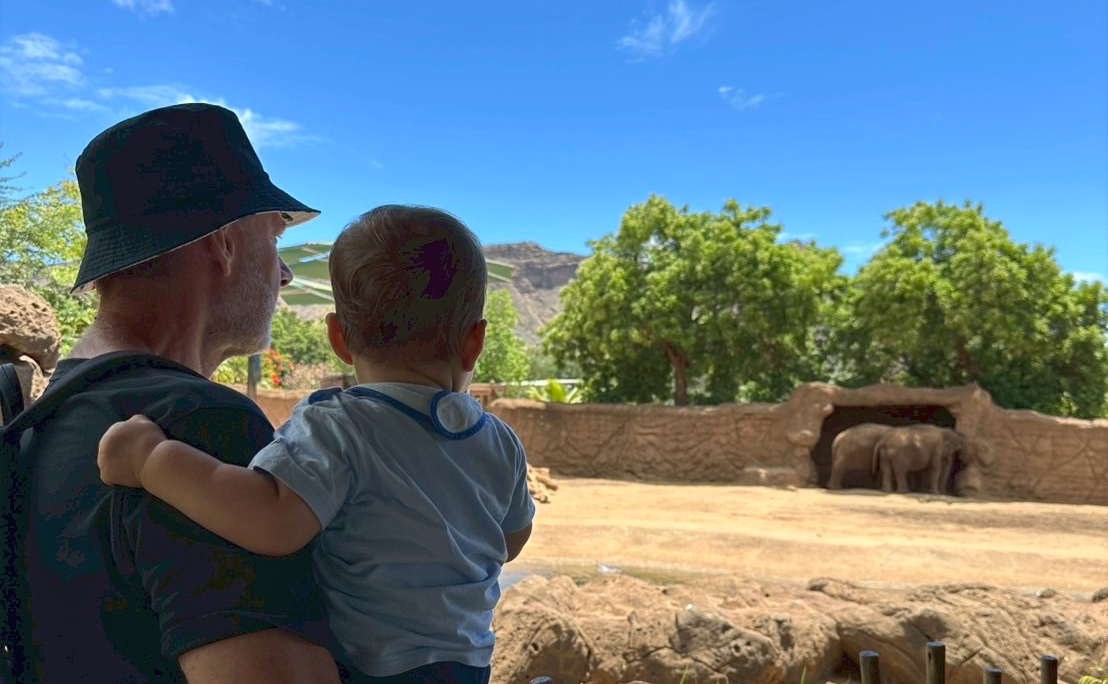
When it was only myself I had to worry about I didn’t really care, I guess. My son’s privacy is different, though, and I have zero intention of showing his face on social media. I no longer trust sending photos via messaging apps either. Still, I want to share photos with my family and close friends. My mum, especially, is constantly asking for photos of her grandson, which is understandable, but I’ve been hesitant to send them on WhatsApp.
I needed a way to safely share photos and ensure they are only seen by people I know, and an email newsletter seemed like a possible solution.
As more people leave social media behind, platforms that offers newsletter services — such as Ghost and Substack — have become an alternate way to reach a target audience. Subscription-based newsletters are the big thing among “creators” now, but are usually written for fans who pay for the content, rather than for friends and family. This means they need a public entry point on the web and are accessible to companies such as Google, which indexes the data so it can show up in search results.
I realised that if I wanted my personal newsletter, and the photos I include, to remain hidden from the general public I needed a more secure solution.
In order to achieve this I’ve set up a Virtual Private Server (VPS), which is basically my own locked-down computer in the cloud. Only I have the passkey to it, and everything is encrypted. On the VPS, I’ve installed an open-source, self-hosted photo management app called Immich. The albums on this server are password protected with links that expire after 30 days. Any photos I include in an email also use private expiring links.
To keep the emails as secure as possible I’ve also installed an open-source newsletter and mailing-list tool called Listmonk. Think of this as a self-hosted alternative to Mailchimp or Substack — so your addresses stay private and are never shared.
I know this may all seem like overkill, but I hope my reasons for doing it make sense. I’d love to just sit down and flip through photos with you in person, but until I can, this seems like the next best option.
I will try to send these letters regularly, but not so often they feel like spam.
Until next time.
A